
From the First Small Talk to the Final Aha Moment
From the outside, it looks simple. I arrive at the Mastery Club, greet familiar faces, grab a coffee, perhaps some chocolate, and wait for the next negotiation session.

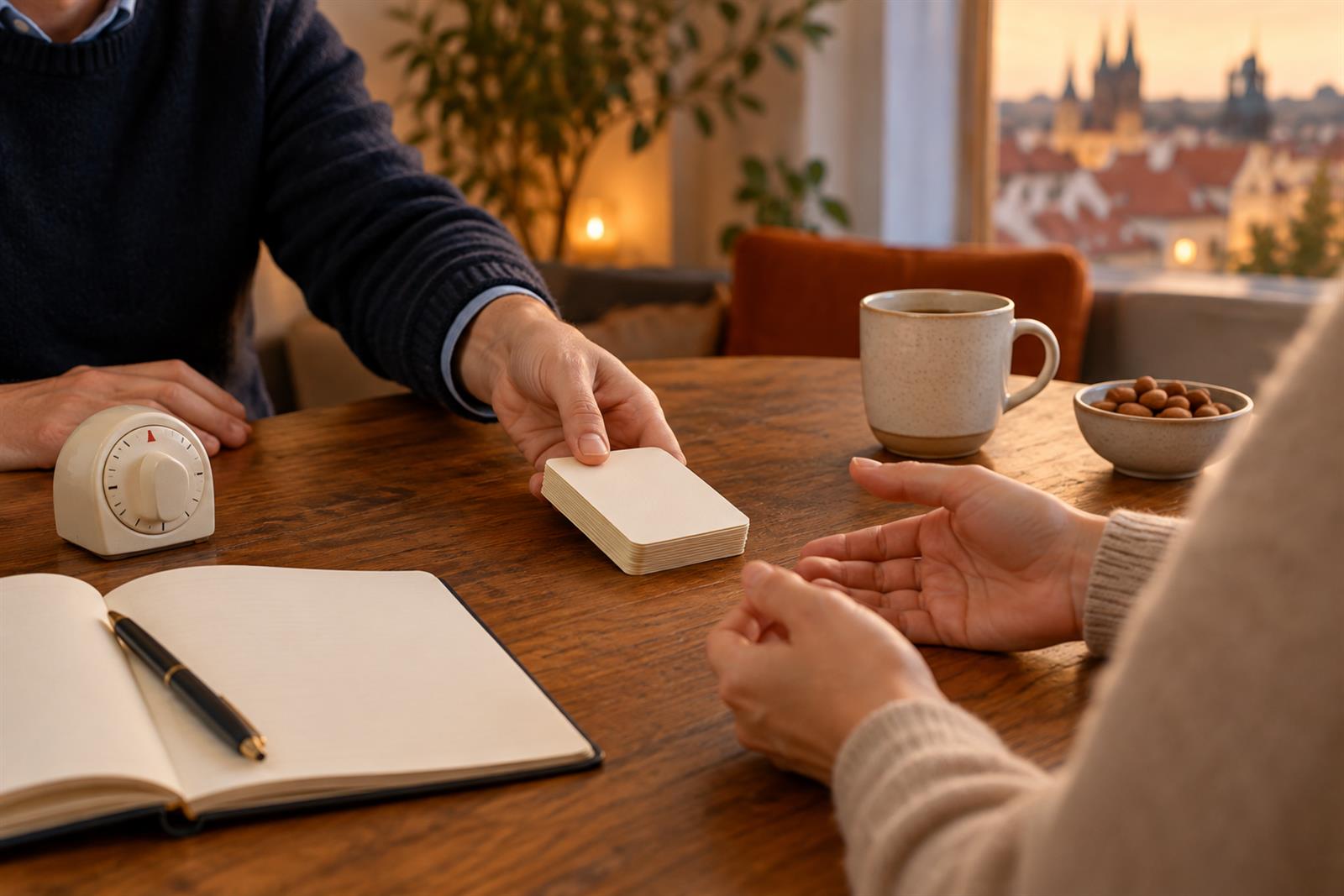
From the outside, it looks simple. I arrive at the Mastery Club, greet familiar faces, grab a coffee, perhaps some chocolate, and wait for the next negotiation session. But it begins before the official introduction, in the first questions, small agreements, and the way the room gradually tunes in to the evening ahead. For me, the Mastery Club is more than a place to practice techniques. It is a living organism where something unique unfolds every time.
The first round of networking starts before the program itself. Someone shares a situation from practice, someone else clears their head after work, and another gradually joins in. I usually sit with the group, open my journal, and start writing while still listening. Whether there are fewer of us or more, I focus on the variety in the room. Everyone brings different experiences, mindsets, and responses to pressure.
Small details matter too: almonds or chocolate-covered fruit – a ritual that softens the atmosphere and reminds me that even demanding learning can feel human.
The first practical block is intense: negotiation cards, a random draw, and a five-minute limit. One side buys, the other sells – usually tons of apples, sometimes cocoa beans, and occasionally something else entirely. The first time, it shocked me. I did not know what to do first. Over time, I began to see the layers: what the brief really means, where the priorities and traps lie, and when too much information hinders rather than helps.
After several rounds, we debrief what it felt like, what worked, what did not, and what we noticed only in hindsight. This leads naturally into the evening’s topic – a technique, model, or type of negotiation. I listen, piece the connections together, and then the break comes. In other words, more networking. Even with a set duration, it rarely ends on time. Here, even the break negotiates a little extra for itself.
Then the case study begins. Roles are assigned, coaches are appointed, teams are formed, and instructions are given. Preparation usually takes twenty minutes, as does the negotiation. I use a negotiation canvas to define the strategy, objectives, demands, limits, and opening lines. Sometimes we reach an agreement; other times, everything goes off the rails. And sometimes the scenario is deliberately designed to make agreement impossible.
That is where the training’s magic lies. It resembles life “out there”: I do not know everything, there are no guarantees, someone may derail a brilliant plan, or I may simply be having a bad day. There is not always a happy ending. Often, only after the final round do I realize what I wanted to say, what I thought I could manage, and why the perfect lines come only after the final whistle.
For me, the debrief is not a verdict but a mirror.
For me, the debrief is not a verdict but a mirror. It shows what went well, what did not, and what others noticed. It reveals both what I can be proud of and where I can improve. The Mastery Club isn't about learning perfect lines; it's about learning safely. I can make mistakes, analyze them, and learn from them before they cost me something in the real world.
On the way home, I replay certain moments: the line that worked, the silence I held, and the situations that did not go well. I leave without a ready-made formula, because every negotiation is different. But I take away experiences that build on one another, and I may speak up when it is no longer just a training exercise.