
Police Crisis Negotiation Training: From Micro-Skills to Real-Life Operations
Police crisis negotiator training is not based on improvisation, but on precise methodology and the gradual development of skills.

Police crisis negotiator training is not based on improvisation, but on precise methodology and the gradual development of skills. Modern programs draw on the micro-skills model, originally used in psychological counseling. Negotiators acquire each skill step by step so that they can apply it automatically in a real crisis.
Training That Leaves Nothing to Chance
In Slovakia, the National Crisis Negotiation Coordinator oversees police crisis negotiator training and ensures we follow the latest, most rigorous international standards. The basic crisis negotiation course lasts two weeks and is one of the most demanding – if not the most demanding – specialist police courses. The training is not theoretical. It centers on targeted exercises that simulate real-life situations and expose a negotiator’s weaknesses.
Listen First, Solve Later
Training begins with the Basic Listening Sequence (BLS). Negotiators learn to master active listening: mirroring, paraphrasing, emotion labeling, summarizing, minimal encouragers, and using silence. Only when these skills have become automatic can they move on to the next stages – confrontation, focusing attention, negotiating conditions, and influencing the behavior of a person in crisis. In practice, beginners' greatest challenge is resisting the urge to solve the problem too soon. FBI research confirms that training significantly reduces the tendency to “rush to a solution” and improves the ability to work with emotions and context.
Simulations Reveal More Than Theory
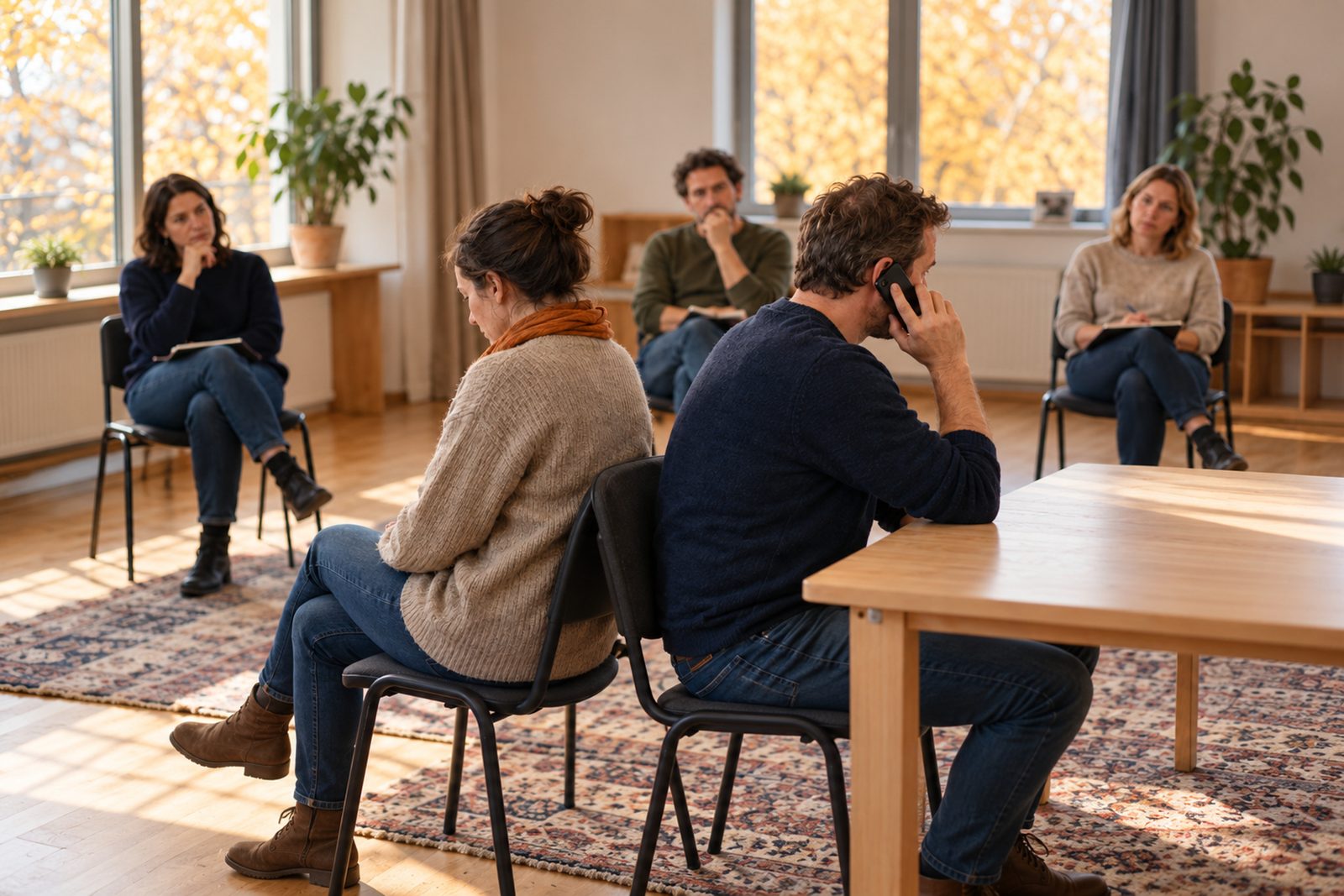
One practical exercise is the Fishbowl, in which the negotiator sits with their back to the person in crisis, played by a role-player, and may use only active listening. The other participants record every technique the negotiator uses. The exercise quickly reveals who tends to “rescue” and who can truly listen. Remaining silent is usually the hardest part – just as it is in telephone negotiations.
Role-play and simulations form the core of the training. They reveal stress, a tendency to seek quick solutions, the ability to work with silence, and reactions to anger, crying, or manipulation. Their greatest benefit is that negotiators can “get a situation wrong” without consequences in a safe environment – an opportunity they do not have in a real crisis.
Train for Reality, Not Dramatic Scenarios
What matters, however, is not the number of simulations but their realism. The biggest mistake is training for what is “interesting” rather than what is probably going to happen. Beginners want terrorists, aircraft hijackings, and active shooters. The reality is different: most cases involve suicidal crises, barricade incidents, and negotiations with people experiencing mental health conditions. When negotiators train with unrealistic scenarios, they become disoriented in a real crisis. When they train with realistic ones, they can draw on experience. That is why we use real case studies from Slovakia and abroad.
The role-player is the key element of every simulation, and everything depends on their performance. They must adhere strictly to the scenario and avoid adding anything of their own. If they are portraying a person with a mental health condition, they must study the person’s likely behavior so that the simulation is credible and realistic.
The biggest mistake is training for what is “interesting” rather than what is probably going to happen.
Feedback You Are Not Allowed to Answer
Training does not end when the simulation does – quite the opposite. One of its most important elements is debriefing. This is not simply an assessment of what the negotiator did well or badly. More important is understanding why they made a particular decision at a particular moment. Our National Coordinator has structured this exceptionally well: after the exercise, participants in the basic course sit down and receive feedback from the role-players and observers. Crucially, the negotiators are not allowed to respond to the feedback. They are told three things they did well and three things they can improve.
Where a Police Officer Becomes a Negotiator
Negotiation is a craft developed slowly, patiently, and with guidance from experienced professionals. Whether a negotiator can help at a critical moment depends on realistic training, high-quality simulations, and honest feedback. During training, a police officer becomes a negotiator: discovering their strengths, identifying their weaknesses, and learning to manage situations where there may be no second chance.
In a crisis, there is no time to find out what works – a negotiator must rely on what they have truly trained for.